

Why Employees Don’t Engage With Workplace Wellbeing Programs

You launched the wellbeing program. You sent the emails. You gave employees access. And participation is still lower than you hoped.
It’s tempting to read that as a lack of interest. But low participation doesn’t necessarily mean employees don’t care about their wellbeing as employees. A 2024 study published in the Journal of Occupational and Environmental Medicine examined why employees do and don’t participate in workplace wellbeing programs. The researchers highlight that participation is influenced by both individual and organizational factors, suggesting employers should look beyond employee motivation alone.
So instead of asking, “Why aren’t employees more motivated?” a better question may be, “What’s making participation harder than it needs to be?”
Workplace wellbeing isn’t just something you offer. It’s a culture you create. Understanding what supports engagement, and what gets in the way, can help HR and Benefits leaders make better use of the resources they already have.
Do You Know What Employees Need From Your Wellbeing Program?
A program can be thoughtfully designed and still fall short of what employees need from it.
The same JOEM research emphasizes the importance of understanding employees’ unmet needs and personal wellbeing priorities. It also cautions against relying primarily on the experiences or assumptions of program leaders when determining programming.
Effective wellbeing strategies are informed by the workforce itself. They consider where employees need support, what topics are relevant to them, and how they are most likely to participate.
That requires listening. Employee surveys, feedback after programming, participation trends, and ongoing conversations can help HR teams identify which topics and formats are generating participation and where there may be gaps.
Employee priorities can also vary across roles, schedules, life stages, and circumstances. A comprehensive strategy can account for different dimensions of wellbeing, including physical, mental, financial, social, and professional needs, without assuming every employee will participate in the same programming.
Variety has value when it is intentional. The objective is not simply to offer more programming. It is to offer programming that has a clear purpose and reflects the needs of the workforce.

Are Employees Aware of What’s Available?
A strong wellbeing offering has limited value if employees don’t know about it or only hear about it once.
A launch announcement can establish initial awareness, but employees are continuously managing communications, priorities, and responsibilities. Over time, wellbeing resources can become less visible without continued communication.
Promotion should therefore be considered part of the wellbeing strategy itself.
Communications can highlight upcoming opportunities, explain the purpose of a particular topic, and make the next step clear. Managers can also reinforce awareness when appropriate by sharing relevant programming with their teams.
Employees need to know a benefit exists in order to engage with it.
Effective promotion is less about frequency and more about relevance, timing, and clarity. Employees should understand what is available, why the resource is being offered, and how to participate without having to search for that information.

Is It Easy to Participate?
Interest alone doesn’t guarantee participation. The process of accessing a program matters, too.
Multiple logins, unclear instructions, difficult-to-find information, or significant time commitments can create unnecessary barriers between initial awareness and participation.
HR teams can evaluate the process from the employee’s perspective. How easy is the program to find? Are the steps to participate clear? Is important information accessible in one place? Does joining require more time or effort than necessary?
There is also a broader consideration. When wellbeing programming adds additional steps or significant time requirements to an employee’s workday, participation may become less practical.
Wellbeing programming should be designed to work within the workday, not compete with it.
Making wellbeing accessible means reducing unnecessary barriers and respecting employees’ time. A straightforward participation process gives employees a clearer path from learning about an opportunity to taking part in it.

Does the Timing Work for Your Workforce?
Even valuable programming can see lower participation when its timing does not align with how employees work.
Meeting schedules, shift structures, caregiving responsibilities, distributed teams, and time zones can all influence whether employees have a realistic opportunity to participate. A schedule that is accessible to one group may not provide the same opportunity to another.
Flexibility is therefore an important part of accessibility.
Different session lengths, scheduling options, and participation formats can create more opportunities for employees to engage. Shorter experiences may provide an option within demanding schedules, while on-demand programming can extend access to employees who cannot attend live.
At FitPros, what we’ve seen work with clients is a combination of accessibility and choice. Live and on-demand programming, virtual and onsite experiences, and a range of wellbeing topics provide multiple ways to participate rather than expecting an entire workforce to engage through one format.
Meeting employees where they are does not require an individual program for every person. It means building enough flexibility into the strategy to account for differences across a workforce.

Has Your Programming Become Too Predictable?
Consistency can help establish wellbeing as part of workplace culture. At the same time, using the same formats and topics repeatedly can limit the range of employees a program reaches.
Keeping programming varied does not require rebuilding the strategy every quarter. Organizations can introduce new topics, rotate formats, and create different types of experiences while maintaining a consistent approach to wellbeing.
A Health Talk serves a different purpose than a fitness class. A cooking class provides a different format than a wellness walk. A Health Fair can introduce employees to benefits and resources they may not have explored independently.
The key is variety with intention.
Programming should respond to what an organization is learning about its workforce. Participation data and employee feedback can help identify which offerings are working well, which are reaching different groups, and where adjustments may be useful.
A strong wellbeing strategy can evolve alongside the workforce it is designed to support.

What Can You Learn From Employees Who Don’t Participate?
Participation data tells HR teams who is engaging. It does not always explain why others are not.
The JOEM research highlights an often-overlooked source of information: employees who don’t participate. The authors note that workplace wellbeing evaluation has historically focused heavily on participants and their outcomes, leaving less attention on nonparticipants and the factors associated with nonparticipation.
Feedback from employees who participate consistently can help improve programming, but relying only on participants can provide an incomplete picture of the workforce.
HR teams can also ask nonparticipants whether they knew about the program, whether scheduling presented a barrier, whether the topics were relevant, and what changes could make participation more accessible.
Nonparticipants can provide important information about where a wellbeing strategy may have gaps.
Low participation is still useful information. Understanding what sits behind participation numbers can help organizations make more informed decisions about programming, communication, and accessibility.
The Common Thread: Make Wellbeing Easy, Relevant, Varied, and Human
There is unlikely to be one wellbeing program that serves every employee in the same way, and that does not need to be the standard for success.
Strong wellbeing strategies are responsive. They incorporate employee input, reduce unnecessary barriers, provide meaningful choice, and use participation data and feedback to guide future programming.
They also recognize the value of human connection.
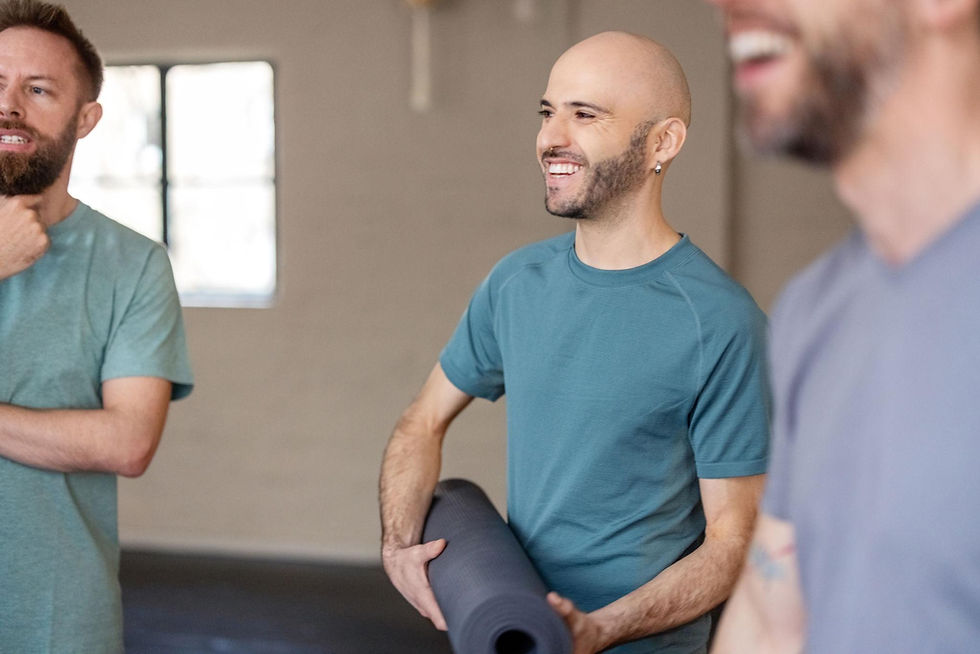
Live, interactive experiences give employees opportunities to ask questions, learn alongside colleagues, and participate with guidance from a credentialed professional. These experiences can also support social connection and accountability while adding variety to an organization’s overall wellbeing strategy.
That human element is central to how we think about wellbeing at FitPros. Our business is putting people first. Through mindful practices, opportunities for personal and professional growth, fitness, and social connection, the goal is to make wellbeing accessible and relevant so employees have resources that support them in showing up healthy and at their best.

The Bottom Line
When employees aren’t engaging with a wellbeing program, the answer is not necessarily to add another program. First, examine what may be limiting participation in the resources already available.
Ask employees what they need. Include nonparticipants in that conversation. Reduce unnecessary barriers to access. Consider how scheduling affects participation. Keep programming relevant and varied, and communicate clearly about what is available and how employees can participate.
Workplace wellbeing is an everyday practice, not simply a collection of benefits. A strategy built around employee needs, accessibility, and continued evaluation gives organizations a stronger foundation for supporting participation over time.
Improving engagement can start with something simple: listening to the people the program is designed to support.
Source
Sherman, B. W., Stiehl, E., Wator, C., and Pratap, P. L. “Why Don’t Employees Participate in Well-being Programs? A Research-Informed Systems-Based Model.” Journal of Occupational and Environmental Medicine, February 2024.
Looking for more? Contact a Wellbeing Manager to discuss your organizational wellbeing needs.

We provide workplace teams with mindful practices, personal and professional wellbeing growth, fitness instruction, and opportunities for social connection. We aim to inspire the highest potential in people at work, in life, every day, so they can show up healthy and at their best.


